
What Every Man Needs to Know
A Guide to Surviving and Thriving After Divorce this 2026
The moment my ex-wife and I told our kids we were divorcing, I felt detached, like I was watching a stranger’s life unravel. I rehearsed my words, kept my voice level, and did what society expects from men: I held it together.
What I didn’t realize was that holding it together was slowly breaking me.
If you’re a man facing or going through divorce right now, this is for you. You’re likely staring at the ruins of the life you built, feeling pressure to man up and move on. The reality is harsher. Recent data shows divorced men face heightened risks of depression, substance abuse, and even mortality compared to married men or divorced women. For instance, studies continue to link divorce to a 23% higher mortality rate overall, with men experiencing steeper health declines due to lost marital benefits.
I know these stats now. I wish I’d known them sooner.
Back then, I was drowning. My identity as husband, provider, and the guy who had it all figured out vanished overnight. When asked how I was, I’d say fine, even as everything inside screamed otherwise.
Admitting struggle felt like failing at manhood.
Why Divorce Hits Men Harder: The Hidden Realities in 2026
Divorce doesn’t just end a marriage. It dismantles core aspects of male identity differently for men than women.
About 70% of divorces are still initiated by women (per longstanding research from sociologists like Michael Rosenfeld and recent 2025 confirmations from sources like the American Sociological Association). This means most men are blindsided or catch up late. By the time you hear I want a divorce, she may have grieved for months, perhaps with friends, a therapist, or even a coach. You’re just beginning the process.
Deeper issues tie into masculine norms:
- Marriage provides greater health protections for men, including lower mortality risks. Divorce reverses this and elevates chances of cardiovascular issues, immune suppression, and metabolic problems.
- Provider roles remain central to many men’s sense of purpose. When that framework collapses, so does perceived value. Studies link male-breadwinner expectations to higher separation odds during unemployment or financial strain.
- Women often maintain broader emotional networks. Men rely heavily on their partner. Post-divorce, men report higher levels of loneliness (often nearly double in the first year, with gaps narrowing over time but persisting in emotional forms for many).
The irony stings. You poured hours into providing, believing it made you a good husband. She felt emotionally alone. Now she has support. You have routines and isolation.
In 2026, with divorce rates hovering low (around 2.3–2.5 per 1,000 people) due to later marriages and shifting norms, the men who do divorce still face these unique pressures. But awareness changes everything.
I survived, not by toughing it out solo, but by doing what felt counterintuitive: feeling the pain, seeking help, and rebuilding strategically. Here’s what I wish every man knew from day one.
Step 1: Acknowledge Your Emotions. Stop Boxing Them Up
For months, I functioned: work, kids, routines. I mistook functional for fine. Anger? Boxed. Grief? Boxed. Fear? Boxed.
Those boxes eventually overflow.
Men adhering to traditional norms are less likely to seek mental health help and more prone to depression during divorce. Suppressing emotions intensifies them and raises risks for substance abuse and heart issues.
My breakthrough came on an ordinary Tuesday. While staring at my kids’ photo, I broke into uncontrollable sobs. It was terrifying, but also honest. I named it: heartbroken, scared, grieving my old identity.
Naming emotions reduces their power. Research shows men who process feelings recover faster.
Practical steps to start today:
- Journal daily. Write one honest sentence about how you feel, no filter.
- Speak it aloud. In the car or shower, say I’m angry, scared, or lost.
- Text a trusted friend. Try This is harder than I expected. Feelings like anger, relief, or both at once don’t make you weak. They make you human.
Step 2: Build Real Support. You Don’t Have to Go It Alone
I was socially self-sufficient. Friends existed, but I never needed them emotionally. Divorce shattered that.
Men often lose their main emotional outlet (their wife) and lack backups. This leads to dangerous isolation.
My turning point came when an old friend texted: I went through this. Beer? Three hours later, masks off. He’d felt the same provider shame and kid-loss terror. He listened with no fixes, just understanding.
How to rebuild your circle:
- Reconnect intentionally. Message that high school buddy or old colleague with Hey, going through a rough patch. Coffee?
- Be selective and real. Share with 1–2 trusted people beyond I’m fine.
- Join men’s spaces. Try DivorceCare groups, online divorced dads forums, or men’s therapy circles. Shared stories cut loneliness.
- Keep routines. Don’t ditch poker night or gym time. Social ties protect even without deep talks.
Men with strong connections post-divorce report better mental health, lower substance risks, and higher satisfaction. Vulnerability isn’t weakness. It’s survival.
Step 3: Get Professional Help Early. Therapy + Divorce Coaching Changes Everything
I waited 10 months for therapy. Pride wasted time. Those months were my darkest.
Only about one in three men seek mental health treatment, despite higher distress. Divorced men face peak suicide risks in the first years.
My therapist (a men’s issues specialist) reframed it: You’re not broken. You’re accelerating recovery.
Therapy processes past patterns. Divorce coaching builds forward strategies.
Why coaching stands out for men in 2026:
- It targets masculine challenges: provider identity, emotional regulation, boundaries.
- Practical tools: The pause before reactive texts; role-playing co-parenting talks; mapping finances, career, and health.
- Faster empowerment. Clients report reduced anxiety, better decisions, and optimism.
Studies on coaching show accelerated healing, improved regulation, and constructive conflict skills.
Action plan:
- Start therapy if depression or anxiety is severe or substances are involved.
- Add a men’s-focused divorce coach for real-time tactics.
- Combine both. Therapy heals backward. Coaching builds forward.
Seeking help isn’t defeat. It’s smart strategy. It saves relationships with kids, sanity, and sometimes lives.
Step 4: Protect Your Body and Mind. Health Is Non-Negotiable
Four months in, I looked wrecked: gaunt, exhausted, barely eating, sleeping, or exercising.
Divorce links to higher heart disease, hypertension, and inflammation in men.
My daughter’s question Daddy, why so tired? hit hard. I treated my body like my legal case: intentional.
What worked:
- Exercise daily. Started with walks and built to triathlons. It combats depression effectively.
- Fix sleep. Routine, no screens, cut alcohol.
- Eat intentionally. Meal prep protein and veggies.
- Stress tools. Breathwork, short meditations.
- Doctor check-ins. Be honest about stress and monitor vitals.
- Alcohol limits. No solo drinking or drinking to cope.
Energy returned. Mood stabilized. Kids noticed I was present. Agency in chaos is powerful.
Step 5: Strategize Your Future Intentionally. Turn Crisis into Reset
A year in, my coach asked: Who do you want to be post-divorce?
Survival mode had blinded me to possibility.
Divorce is a brutal end and a reset. Post-traumatic growth happens with intention: higher satisfaction and purpose.
Key areas to map:
- Finances. Budget with a planner to reduce anxiety through clarity.
- Co-parenting. Treat it as a kid-focused partnership and use scripts plus boundaries.
- Career. Reassess for meaning. My path led to coaching.
- Identity. Rediscover values like adventure, authenticity, and service.
- Health and Social. Keep these non-negotiable.
Tactical roadmap:
- Assess domains honestly.
- Define 3-year success specifically.
- Break it into steps with accountability.
- Use pros: financial analysts, coaches.
Men who emerge stronger aren’t lucky. They’re deliberate.
I’m proof: better father, healthier, happier, meaningful work, authentic relationship. It wasn’t an accident.
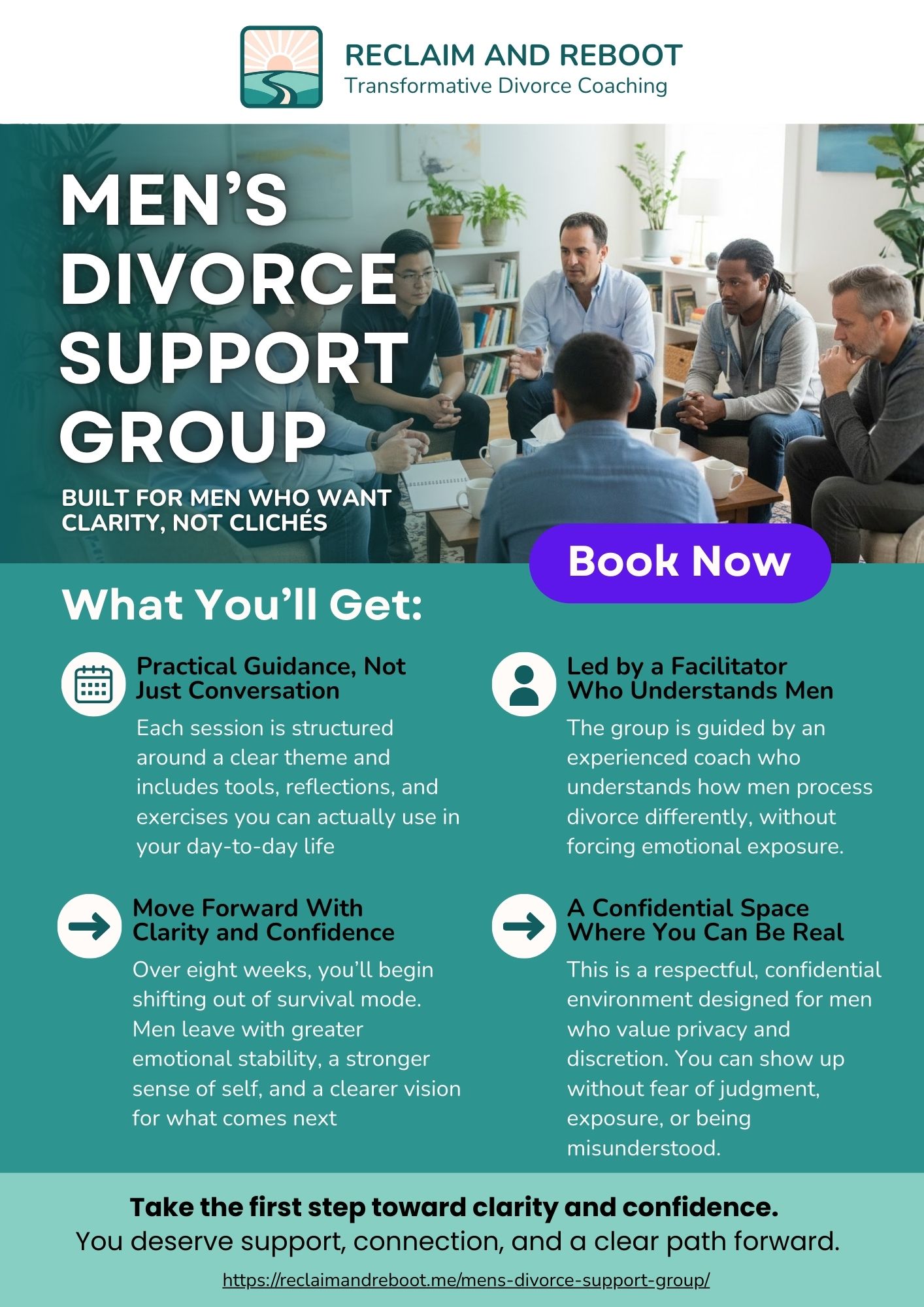
Join Our Men's Support Group
You’re Not Supposed to Figure This Out Alone. In the blog above, I shared what I wish someone had told me: divorce hits men differently, and trying to “hold it together” alone nearly broke me. The stats are real—higher risks of depression, substance issues, loneliness, even mortality. But the good news? Men who reach out and build real support come through stronger, healthier, and more present for their kids and themselves.
That’s exactly what this group is for.
This isn’t therapy (though many combine it with professional help). It’s a brotherhood of men navigating separation, divorce, or post-divorce life. We talk about the stuff society tells us to bury: shame over “failing” as provider, terror of losing time with kids, rebuilding identity, setting boundaries with an ex, managing anger without blowing up, and planning a life that feels meaningful again.
The Road Ahead: Choose Growth Over Survival
Divorce hurts. There is no shortcut. But how you navigate defines the outcome.
The worst sufferers tough it out alone, suppress emotions, skip help, neglect health, and react blindly.
The strongest embrace vulnerability, seek support, protect health, and redesign intentionally.
You’re not a statistic. Reach out: therapist, coach, group, friend. Today.
Your kids need you whole. Your future self needs smart choices now. You deserve a richer, more authentic life.
I’m rooting for you. You’ve got this.
(If this resonates, consider sharing your story or seeking tailored support. Many men have walked this path and come out thriving.)
Ready to Dive Deeper Into Your Conscious Divorce Transformation?
Explore the complete frameworks and get hands-on tools to accelerate your transformation journey.
Book A Free Strategy Call
30 minute call. No pressure. Just clarity and a plan.
10-minute Divorce Readiness Quiz
Not ready to talk yet? Start here